HomeCostGuide

Paint cost guide

How much does interior painting cost?

Use this guide to plan wall area, coat count, paint quality, prep work, and quote details before you paint a room or whole home.

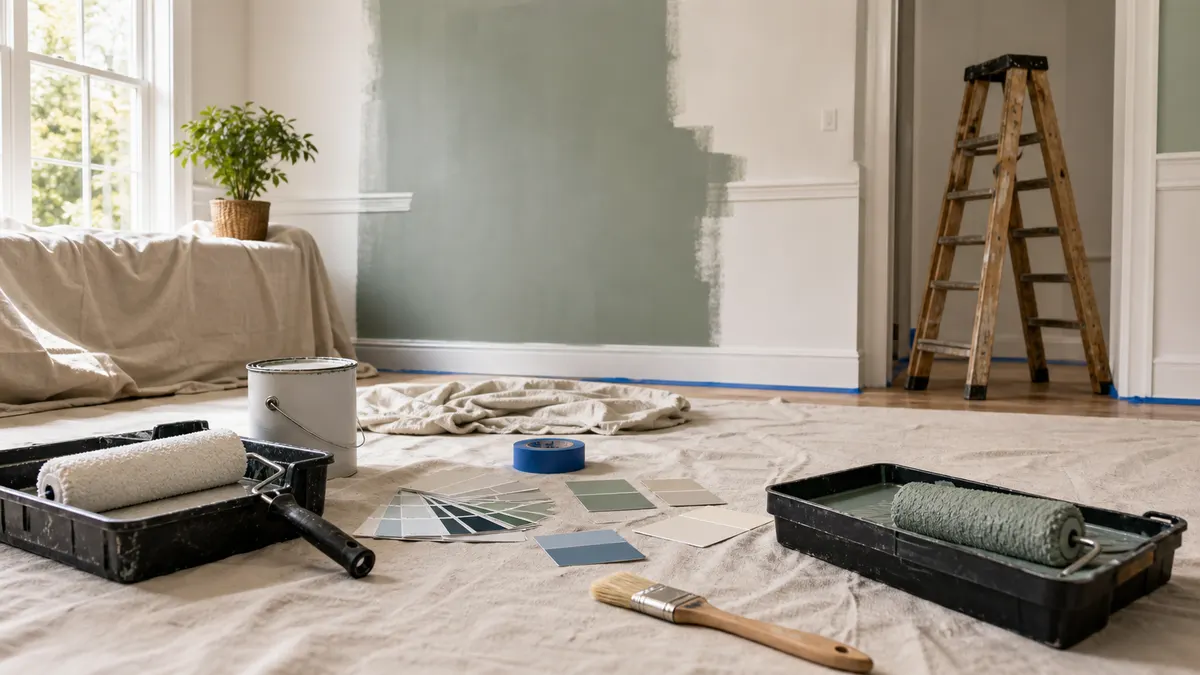
Interior painting project with drop cloths, rollers, painter tape, color samples, and a partially painted wall

Quick planning action

Estimate costs with the free calculator

Open calculator

The calculator uses your project inputs to create a national-average planning range. Use this guide to understand the scope details that can move a real quote higher or lower.

Paint cost drivers

Interior painting cost factors

Painting cost is affected by wall area, ceiling height, trim detail, repair work, number of coats, and paint quality. Rooms with heavy furniture, patching, or dark-to-light color changes usually cost more.

DIY vs hiring a painter

DIY painting can reduce labor cost, but professional painters are faster and often produce cleaner edges and finishes. The best choice depends on project size, time, and tolerance for prep work.

How much paint to buy

A gallon of paint often covers about 350 to 400 square feet per coat. Porous surfaces, dramatic color changes, and textured walls may need additional paint.

Planning steps

How to plan an interior painting project

  1. 1

    Measure wall and ceiling areas and decide which rooms, trim, doors, closets, and accent walls are included.

  2. 2

    Choose paint quality, color changes, sheen, number of coats, and whether primer is needed.

  3. 3

    List prep work such as patching, sanding, caulking, furniture moving, masking, and minor drywall repair.

  4. 4

    Compare quotes by surfaces included, paint allowance, prep level, coats, cleanup, schedule, and touch-up policy.

How to plan an interior painting project room by room

Painting cost is shaped by prep, surfaces, paint quality, color changes, trim, ceilings, access, and cleanup.

Define the painted surfaces

A painting quote should list exactly what gets painted.

  • Separate walls, ceilings, trim, doors, closets, cabinets, stairwells, built-ins, and accent walls.
  • Measure room dimensions and note high ceilings, textured walls, heavy furniture, or difficult access.
  • Decide whether nail holes, drywall damage, caulking, sanding, stains, or water marks need prep.

Choose paint and color assumptions

Paint quality and color changes affect both materials and labor.

  • Ask how many coats are included and whether primer is needed for dark colors, stains, or new drywall.
  • Specify sheen for walls, trim, bathrooms, kitchens, and high-traffic areas.
  • Clarify whether paint is included, who buys it, and what brand or product line is assumed.

Compare cleanup and protection

Good painting work includes protecting the home before the first coat.

  • Ask whether floors, counters, fixtures, windows, hardware, and furniture are covered or moved.
  • Confirm daily cleanup, ventilation, odor concerns, touch-up process, and leftover paint labeling.
  • Get a written list of exclusions such as major drywall repair, wallpaper removal, or lead-safe work.

Cost factors to confirm before you hire

  • Wall area, ceiling height, trim, repairs, number of coats, paint quality, furniture moving, and masking affect labor and material cost.
  • Dark-to-light color changes, stains, new drywall, textured surfaces, and high stairwells often need more prep.
  • Cabinets, built-ins, doors, and detailed trim should be priced separately from standard wall painting.

Common planning mistakes

  • Counting room floor area instead of actual painted wall, ceiling, door, and trim surfaces.
  • Skipping primer assumptions, sheen choices, and the number of coats included.
  • Leaving drywall repair, wallpaper removal, caulking, and cleanup out of the comparison.

Questions to ask contractors

  • Which surfaces are included: walls, ceilings, trim, doors, closets, cabinets, or stairwells?
  • How many coats and what primer, paint brand, product line, and sheen are included?
  • Who moves furniture, protects floors, handles repairs, and labels leftover paint?

Timing and scheduling note

A few rooms can often be painted in a day or two. Whole-home painting, trim-heavy work, repairs, cabinets, or major color changes can take longer.

Related planning pages

What to ask before you compare quotes

What materials, labor, disposal, and cleanup are included?

Are permits, inspections, code updates, or site prep priced separately?

What assumptions could change the price after work begins?

What warranty or workmanship terms are included in the quote?

Paint FAQs

How much does interior painting cost?

Interior painting commonly ranges from about $1.50 to $4.00 per painted square foot, depending on prep, coats, and paint quality.

Does the calculator include ceilings?

Use the wall area field for the surfaces you plan to paint. Add ceiling square footage if ceilings are part of the project.

How many coats of paint do I need?

Two coats are typical for most repainting projects, though one coat may work for similar colors and three may be needed for major color changes.